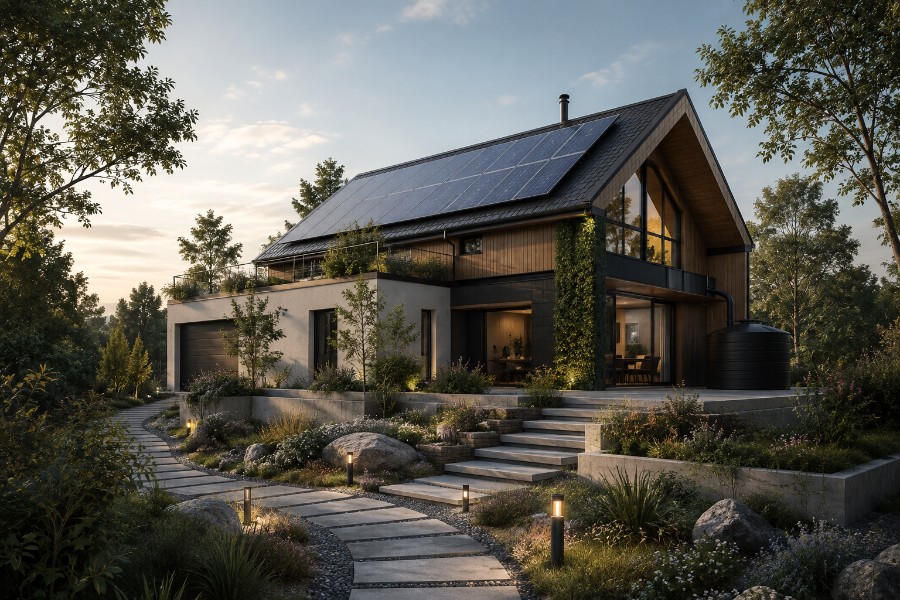
Net-zero is often marketed as a technology problem — add enough solar panels and battery storage, and the math works out. In practice, that approach is expensive and fragile. Our framework starts somewhere much less glamorous: reducing how much energy a home needs in the first place.
Passive Strategy Comes First
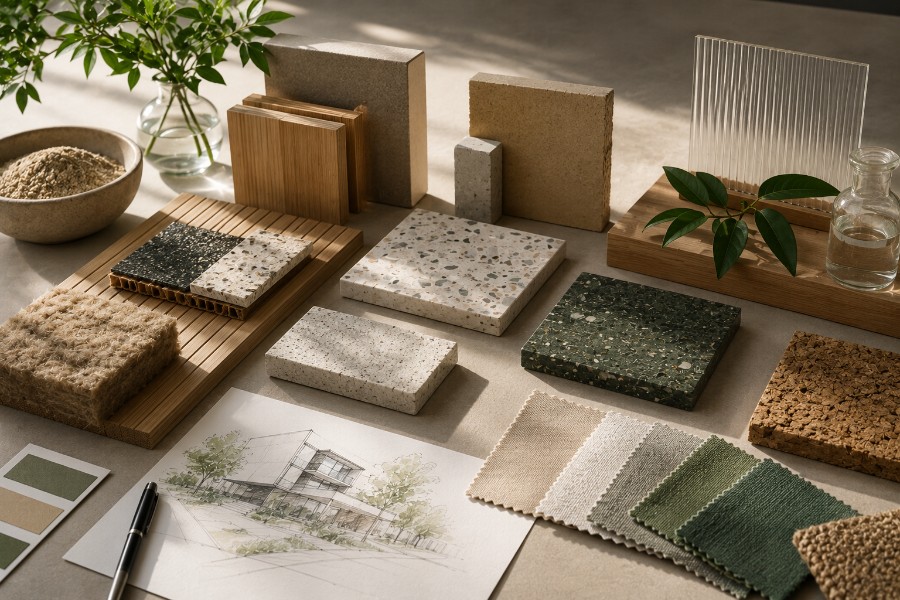
Orientation, shading, insulation and airtightness do the majority of the work before a single piece of mechanical equipment gets specified. A well-oriented, well-insulated home can cut its energy demand by more than half compared to a conventional build on the same site, long before renewables enter the conversation.
Right-Sizing, Not Over-Building
Once passive strategy has done its work, the mechanical and solar systems needed to close the remaining gap are dramatically smaller — and smaller systems are more affordable, more reliable and easier to maintain over the life of the home.
Net-Zero as a Byproduct, Not a Slogan
We’ve found that clients respond better to this framing than to “net-zero” as a headline feature. Once the passive fundamentals are right, net-zero performance becomes a natural byproduct of good design rather than an expensive add-on bolted onto a conventional house.