
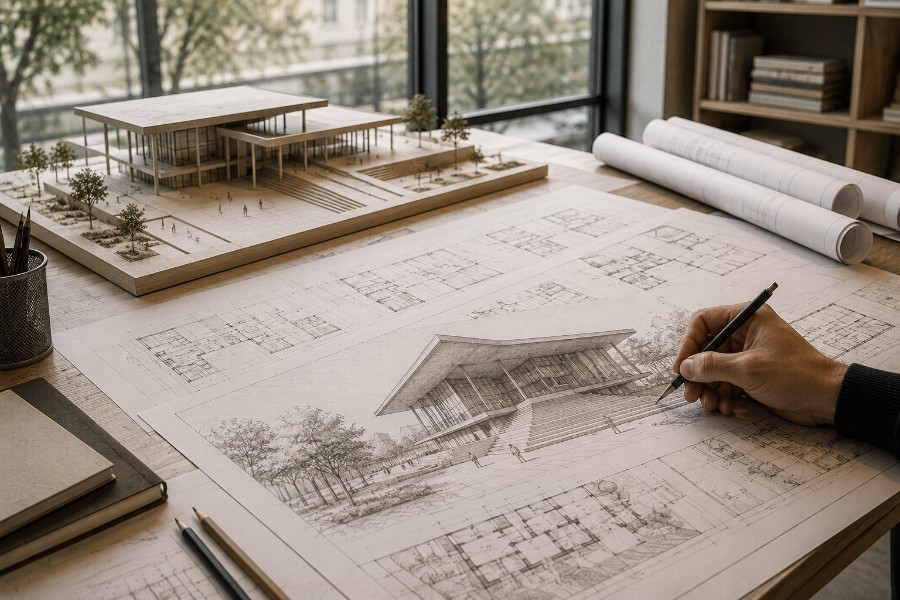
Replacing a well-loved neighborhood library comes with real emotional weight, and no amount of design skill on its own is enough to earn a community’s trust in a new building. For Elmwood Community Library, we ran six community workshops before finalizing a single wall.
Starting With Questions, Not Renderings
Our first sessions intentionally didn’t show any design work at all. We asked people what they actually did in the old library, what frustrated them about it, and what they’d protect if they could only save one thing from the building being replaced.
Letting Feedback Change the Plan
Two priorities surfaced that we hadn’t anticipated: a strong preference for outdoor reading space, and a request that a fragment of the old building’s brick be visibly reused rather than demolished entirely. Both ended up shaping the final design in ways a purely internal process never would have produced.
What We’d Do Differently Next Time
Community engagement done well takes longer and costs more than a standard design process, and it’s easy to under-budget for it. We’re building more time for this kind of listening into every civic project going forward, because the buildings that result from it are simply better used once they open.